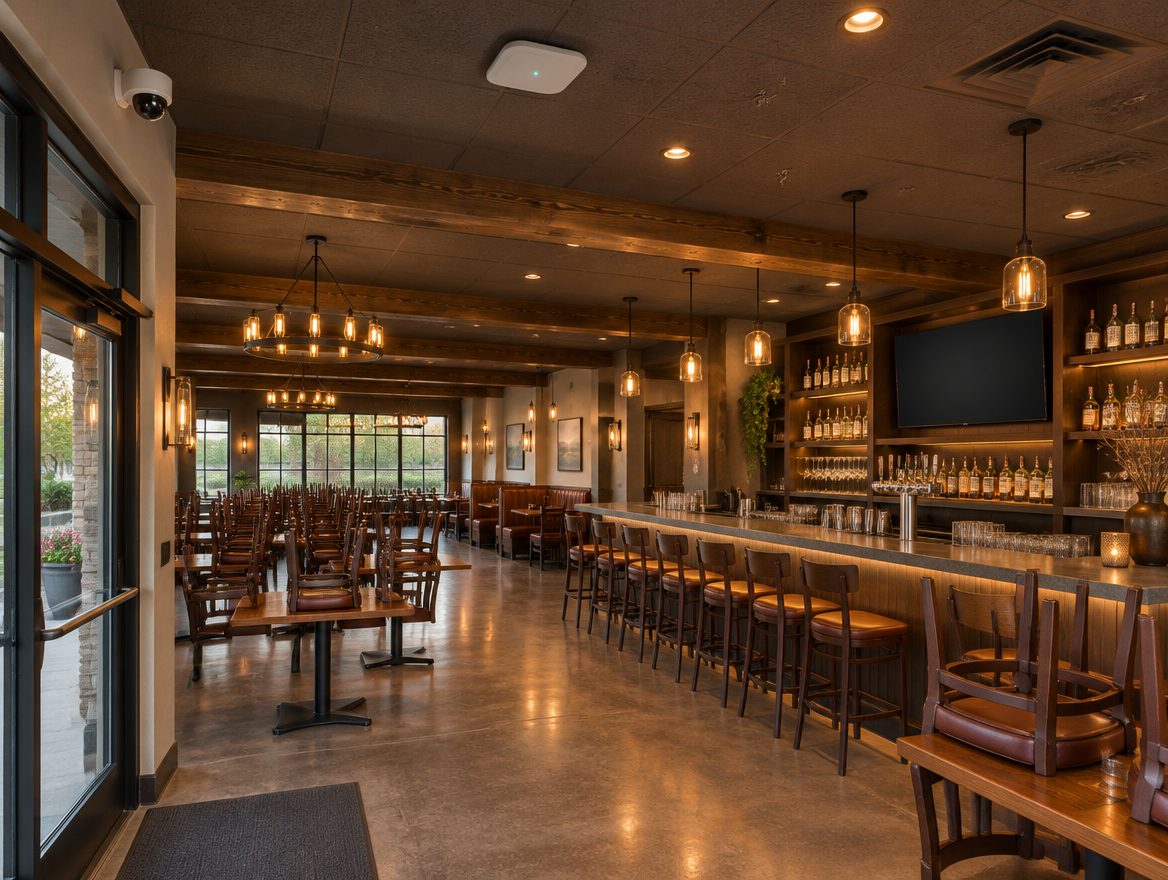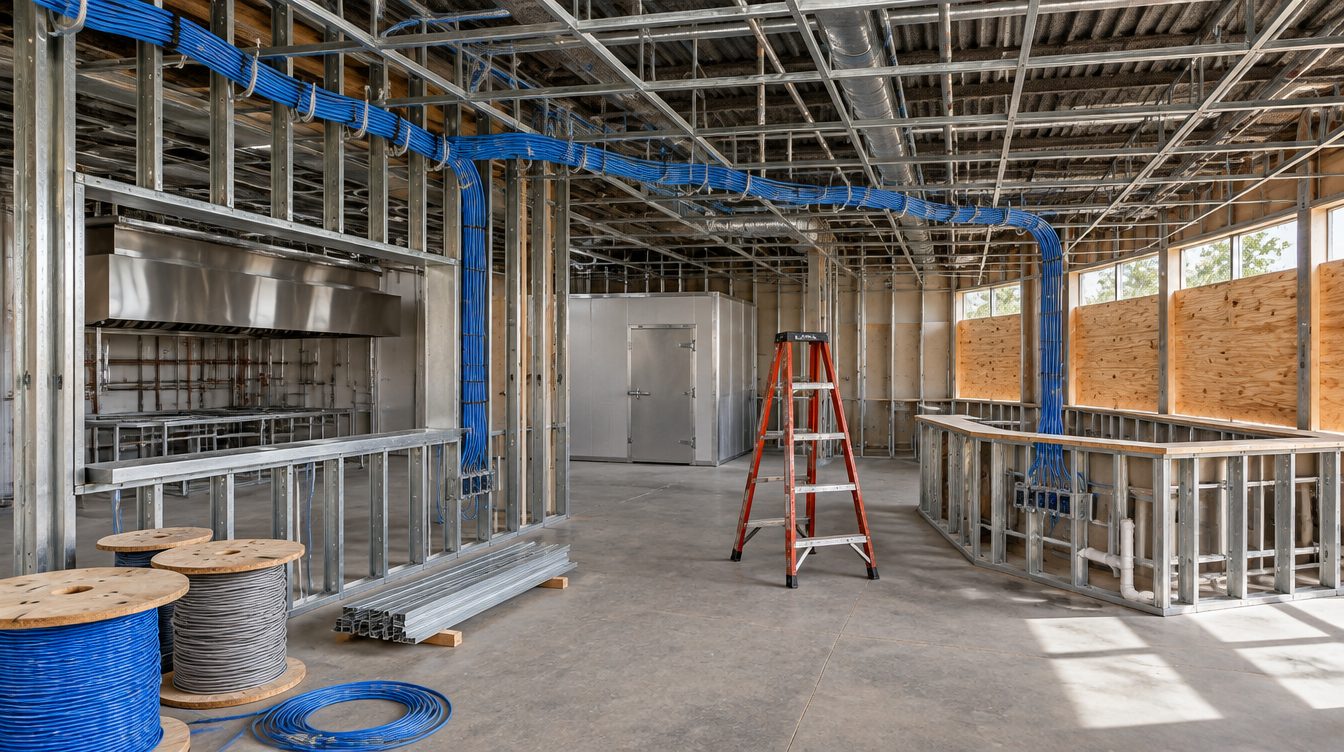
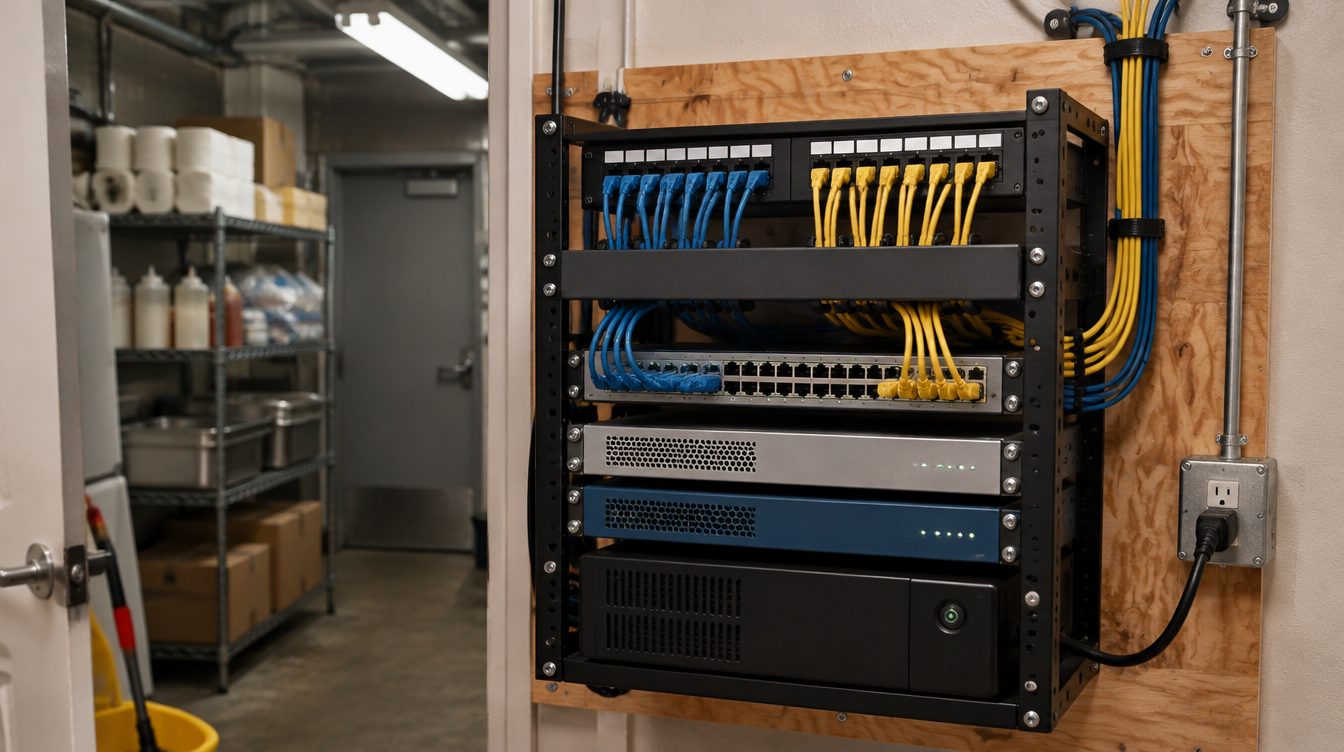
A Seattle restaurant opening hides a whole layer of low voltage work behind the finishes. There are jacks for the registers and receipt printers, a cable to each kitchen screen, ceiling drops for the access points, camera runs to the doors and the bar, and a locked rack that ties it together. This page covers how that layer is scoped, permitted, inspected, pulled and tested, so the network is up and proven before the register company arrives.
Last updated: November 2026
- 1Tally what plugs in, space by space. The host podium, the bar well, each server station, the expo window, the prep line, the back office and any sidewalk seating get a written count of jacks, screens, readers and cameras.
- 2Permit it, then pull it at rough-in. The electrical permit is in hand before the first run goes in, and the cover inspection is booked while the framing is still bare.
- 3Test the runs and turn over the keys. Jacks are tested and tagged, the payment network is checked end to end, and the owner gets the drawings and the admin logins.
Register day goes smoothly when the wiring was settled first
The POS technician mounts terminals, pairs printers, loads the menu and trains the opening crew. That visit assumes the network is already there. Toast, to name one register vendor, states in its site readiness guide that it does not run networking cables. The same guide says it will not install while the location is in active construction. So the cable, switch and rack are a separate scope with their own finish date, finished with the jacks proven. One dead port at the pass on install morning can slide a soft opening by days.
Pieces of a Seattle restaurant network
- Structured cabling: a home run from each terminal, ticket printer, kitchen screen and ceiling radio to a labeled patch panel.
- A walled-off card network: Toast's network requirements recommend physically segmenting the network from other outside traffic, so guest WiFi, staff phones and the office PC sit on a different lane from the card readers.
- Security cameras: the entry, the registers, the bar, the alley door and dry storage, recorded inside the rack.
- Door readers: the service door, the office and the liquor room, each matched to the egress rules further down this page.
- Screens: menu boards at the counter and order screens at the line.
Seattle wants a permit for the low voltage work too
Section 80.50(A) of the Seattle Electrical Code says it is unlawful to install, alter, extend or connect electrical equipment without first obtaining a permit from the authority having jurisdiction, except as the code's subsections (B) and (C) allow. The communication-wiring carve-out in those subsections covers one- and two-family dwellings, not a dining room, so a restaurant's data cable is permitted work at any length. Plan on it from the first draft of the schedule.
Under 80.54(F)(1)(a), the cover inspection waits until the piping, ducts, plumbing and similar installations of other trades running near the electrical work are permanently in place and inspected, and it comes before anything is covered or concealed. On a restaurant job that puts the cable rough-in after the hood ductwork and the plumber, and before the drywall crew.
Exit doors, readers and the occupant load sign
Seattle Building Code 1004.9 requires an assembly room or space to post its occupant load in a conspicuous place, near the main exit or exit access doorway. That posted number drives the hardware schedule. Under 1010.2.9, swinging doors serving a room or space with an occupant load of 50 or more in a Group A occupancy may not have a latch or lock other than panic hardware or fire exit hardware. The section lets the main exit of a Group A space use key-operated locking under the conditions in 1010.2.4, so the front door and the side doors are scheduled separately. Doors with panic hardware may also be electrically locked under 1010.2.11 or 1010.2.12, and doors serving an occupied exterior area, such as a sidewalk café, may be locked under 1010.2.4 item 8.
A card reader on a side door changes how it locks. Section 1010.2.11 permits electric locks on egress doors when installed to the list of conditions that follows, including that loss of power to the electric locking system automatically unlocks the door, and that operating panic hardware required by 1010.2.9 also releases the lock. The plan lists each reader door with its hardware, how it releases and the circuit behind it. The UPS in the rack carries the registers and cameras through an outage; it is not wired to keep a door shut.
Menu boards and line screens
A wall menu board needs its jack and outlet set behind the mount while the stud bay is open, or the cords end up taped across fresh tile. Line screens get a wired drop rather than wireless, so tickets keep landing when a full room of phones crowds the air on a Saturday. Delivery tablets get their own jack and a shelf near the pass, out of the steam from the dish station.
The rack at the end of the runs
Cable from the floor, the kitchen and the ceiling terminates in one lockable room or wall cabinet: patch panel, switch, firewall, camera recorder and a small UPS, with a label on each port. The cabinet sits away from the dish machine, the fryers and the walk-in condenser, on its own circuit. Accounts are set up in the restaurant's name from day one, from the internet circuit to the camera app.
The drawings and the port list belong to the restaurant permanently. A managed IT plan adds network monitoring and cybersecurity for owners who want someone watching the gear after opening.
Washington's breach law and the card network
Taking cards at the table brings state law into the design. RCW 19.255.005 treats a person's first name or first initial and last name, combined with a credit or debit card number and any required security code, access code or password that would permit access to the financial account, as personal information. Under RCW 19.255.010(8), notice to affected consumers must go out in the most expedient time possible, without unreasonable delay, and no more than thirty calendar days after the breach was discovered, unless the delay is at the request of law enforcement.
A card network kept apart from guest WiFi, a locked rack, and readable switch, door and camera logs are the physical part of that work, because they show what was reached and when. Meeting the statute itself is a question for the restaurant's own counsel.
What Seattle owners ask before the cable goes in
How early does the low voltage plan get drawn?
Once the kitchen layout and seat count are settled, which is usually well before framing. That way the cabling sheet travels with the permit set instead of chasing it.
What does a written scope start from?
A floor plan, the device list, the target opening date and the doors that need readers. If the job grows past that list, the change is raised and the bid updated before the extra work starts.
Can the WiFi radios go up after opening?
They can, but the ceiling cable is far easier with the grid open. Pull the drops at rough-in and hang the radios once the furniture is in.