
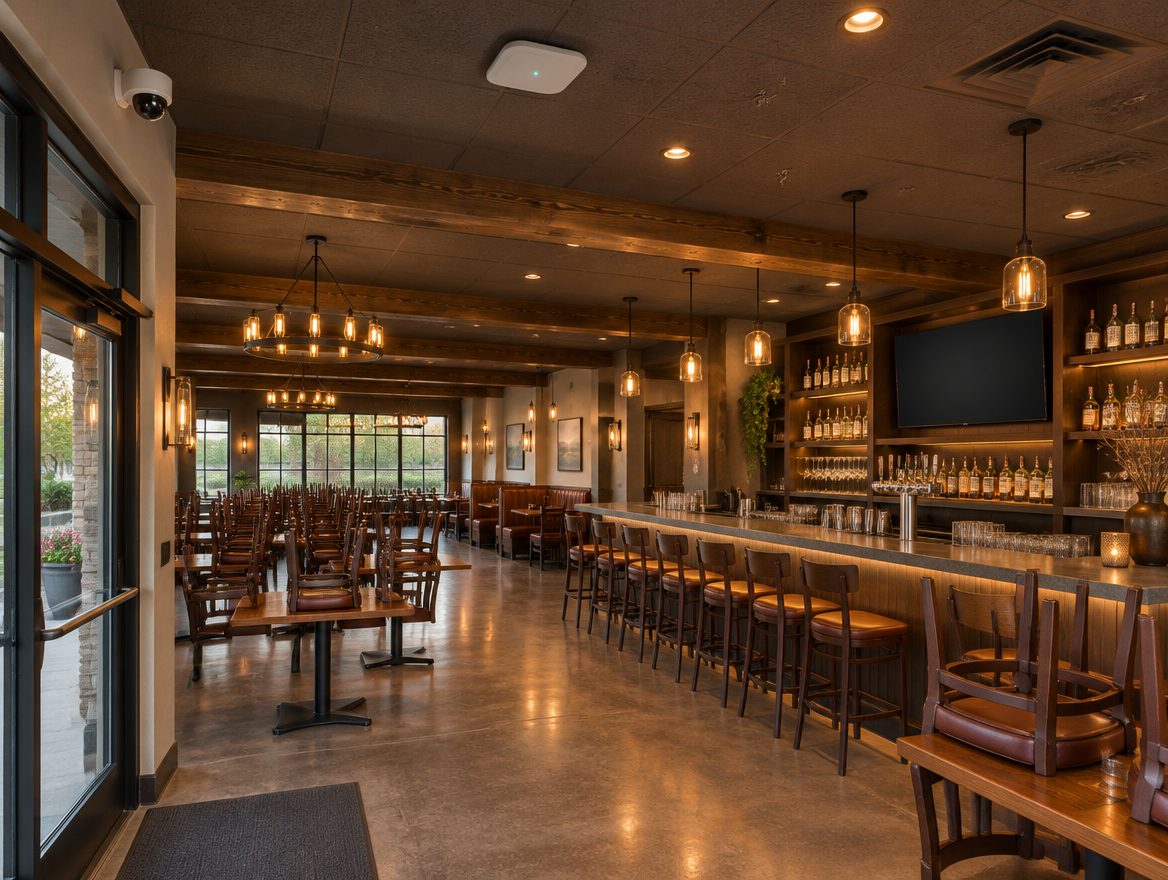
In a Seattle restaurant buildout, structured cabling is the work guests never see. A dedicated line leaves each terminal, ticket printer, card reader, line screen and ceiling radio and ends at one patch panel with a label for every port. The routes are drawn on the floor plan, permitted, run during rough-in, inspected while still exposed, and tested so the POS crew finds working jacks when it arrives.
Last updated: November 2026
The register vendor's checklist, met before it arrives
- Toast's readiness guide gives one vendor's floor: Toast will not complete the install if the Ethernet cables are less than 100MB (Cat5e). The plan here specifies Cat5e or higher for each drop, with both ends terminated, tested and tagged.
- Toast's network guidance recommends physically segmenting the network from other outside traffic and network communications. Card terminals, printers and kitchen screens therefore sit on dedicated switch ports and a separate network from the office and the guest WiFi.
Each POS brand has its own spec sheet; the buildout overview places cabling within the wider project calendar. Final jack counts wait until the restaurant chooses its register system, then follow that vendor's sheet.
Placing radios for the dining room, the line and the sidewalk
Server handhelds, delivery tablets and guest phones all depend on the radios. Toast's requirements say wireless communications should be set to operate on the 5Ghz band. Those signals fade quickly through brick, tile and cooler walls, so the radios follow the rooms: a unit above the dining area, one for the bar, one facing the sidewalk tables, with a walk test near the service door and along the corridor past the walk-in, the usual dead spots. Each radio's cable is pulled while the ceiling is still open.
Permits for data cable in Seattle
SDCI's electrical permit page says you need an electrical permit any time electrical wiring is installed, altered, extended, or connected to any electrical equipment. The Seattle Electrical Code, in 80.50(A), makes it unlawful to install, alter, repair, replace, modify, extend or connect electrical equipment without first obtaining a permit from the authority having jurisdiction, except as allowed in subsections (B) and (C) of that section.
The exemption in 80.50(C)(4) covers wiring for communication systems and installation of optical fiber cables, as set forth in NEC Chapter 8 and Article 770, in one- and two-family dwellings. A restaurant is not a dwelling, so its data and camera cable is permitted work however few runs there are. Older guidance still floating around describes a footage-based allowance for commercial space; the current code has none, and scopes here follow the current code.
Three visits from the inspector
SDCI notes that most permits require three electrical inspections: cover, service, and final. The cover visit is the one that shapes a restaurant schedule. Under 80.54(F)(1)(a), it happens once the piping, ducts, plumbing and like installations of other trades near the electrical work are permanently in place and inspected, and before any work covers or conceals the electrical installation.
In practice the hood duct, gas piping and plumber's rough-in go first, the low voltage lines go in alongside them, and the wallboard waits for sign-off. The cabling dates are worked backward from that inspection rather than forward from the contractor's call.
Storefronts, basements and old buildings
Plenty of Seattle dining rooms sit in brick storefronts or under apartments in mixed-use buildings, with thin ceiling cavities, concrete walls and a basement other tenants also use. Before the drawing is signed off, each path gets walked: where lines rise between floors, where a rated wall is crossed and firestopped, and where surface raceway beats cutting into masonry. Second-generation spaces usually come with abandoned wire; whatever cannot be traced and tested is removed, not recycled.
Test results and the closeout file
Each line is tested as soon as its ends are punched down, and the result is filed under its tag. Closeout includes a jack-to-port spreadsheet, a floor sheet marking each outlet, and switch, firewall and radio credentials held in the restaurant's name. The camera lines pulled at the same time are covered on the security cameras page.
Cabling questions from Seattle restaurateurs
Can the last tenant's cable be kept?
A line can stay if it passes a test and traces to a tagged port. Anything else is pulled, so the new layout does not inherit old guesswork.
Does a line screen really need a wired drop?
Yes. A cabled screen keeps tickets moving at the peak of a dinner push, the moment the radios are busiest.